Your car brakes. The pedestrian steps off the curb. Somewhere between the sensor that saw her and the server that decides what to do, there's a delay. In a data center 800 kilometres away, that delay is measured in milliseconds that don't matter. At 50 km/h, they absolutely do.
That gap—between where data is created and where it gets processed—is the whole story of edge computing. And it's the reason the phrase stopped being a buzzword on conference slides and started showing up in budgets, network diagrams, and honestly, a lot of confused procurement meetings I've sat through.
Here's my position, and I'll defend it: edge computing isn't a replacement for the cloud. It's a correction. We spent fifteen years pretending latency was free. It isn't. The bill always comes due, usually at the worst possible moment.
Key Takeaways
- Edge computing moves processing closer to where data is generated—machines, cameras, vehicles, sensors—rather than sending everything to a central data center.
- The driver isn't novelty. It's physics: signals can't travel faster than light, and round trips cost time your application may not have.
- The real savings often aren't compute costs. They're bandwidth—you stop paying to ship terabytes of raw video you'll throw away anyway.
- Security gets harder at the edge, not easier. You're now managing hundreds of small, physically exposed nodes instead of one hardened facility.
- The honest question isn't "edge or cloud." It's "which 5% of my workload genuinely needs to run within 20 milliseconds of a machine?"
What edge computing actually means (and what it doesn't)
Strip away the marketing and the definition is almost boring. Edge computing is processing data near its source instead of shipping it across a network to a centralized location first.
That's it. The complexity lives entirely in the word "near," which people use to mean wildly different things.
The three places computation actually happens
When you build anything connected today, your processing can sit in one of three spots:
- On the device itself—a chip inside the camera deciding "is this a person or a shadow?"
- At a local gateway or micro-datacenter—a box in the same building, or a small facility a few kilometres away
- In a regional or central cloud—the model everyone defaulted to for the last decade
Edge computing covers the first two. People argue endlessly about which counts as "real" edge, which is a bit like arguing about whether a suburb is a city. The useful question is where your latency budget runs out.
Why this isn't just "local computing" with a new name
Fair challenge. A laptop runs software locally and nobody calls it edge computing.
The difference is orchestration. What makes edge interesting isn't that code runs nearby—it's that you manage thousands of those nearby locations as one fleet, with updates, monitoring, and policy pushed from a control plane. A single embedded device is just firmware. Ten thousand coordinated ones is a platform problem, and platforms are where the money and the pain live.
Why the rise is happening now and not five years ago
Three things converged, and I don't think any one of them alone would have been enough.

First, the sensor flood got real. A single high-resolution camera in a retail store or factory can generate several terabytes a day. Send twenty of those to a central cloud and you're not computing anymore—you're paying a toll booth to move data you'll mostly delete. Most of that footage shows nothing. A person walking past, a forklift, an empty aisle at 3 a.m.
Which is absurd when you think about it. You're spending money to transmit footage of nothing happening, to a server that will look at it, decide nothing is happening, and forget it.
The bandwidth math nobody wants to do
Here's a rough calculation I ran for a client's warehouse project, and it changed the entire design. Twenty cameras, 4 TB per day each, was around 80 TB daily. Moving that to a regional cloud would have cost more per month than the entire analytics platform we were trying to build. Process it locally, keep only the 40 seconds per day where something unusual occurred, and you ship maybe 200 MB. The ratio is comical.
Second factor: the chips got cheap. Hardware that could run a vision model cost serious money a few years back. Now it fits on a board the size of a credit card, draws a few watts, and costs less than a decent dinner.
Third, the network architectures caught up. 5G and modern Wi-Fi make it practical to have hundreds of low-power devices talking to a nearby compute node, which is the plumbing this whole model needs.
Where edge computing actually earns its keep
Not every workload belongs at the edge, and installing hardware in every branch office because it sounds modern is how you burn a budget for nothing. The wins cluster in specific places.
Manufacturing and industrial control
A production line that stops costs money by the minute. A visual inspection system that needs a round trip to a remote server to spot a defect introduces a delay that, on a fast line, means the defective part is already installed. Local inference closes that gap. I've seen inspection cycles drop from a network-dependent few hundred milliseconds to sub-20 locally, which was the difference between a useful system and an expensive camera.
Retail, venues, healthcare
The pattern repeats: video analytics, heatmaps, queue detection, fall detection in care facilities. All of it involves continuous sensor data where the interesting events are rare and the raw volume is huge. Local processing also helps with a less glamorous problem—privacy. If footage never leaves the building, your data-protection obligations get a lot simpler. That's not a technical point. It's a legal one, and it has killed more projects than latency ever did.
Autonomous and assisted systems
Vehicles, drones, anything that moves. You cannot outsource a decision to a distant server when a dropped connection means a dropped outcome. This is the case where edge isn't a cost optimization—it's the only architecture that functions at all.
The part nobody puts in the slides: edge computing is harder than it looks
I'll be blunt, because the conference talks won't be. Distributed systems are hard, and the edge is the most distributed thing you'll ever operate.

Early on, I watched a team roll out edge nodes to a dozen sites and then discover—three weeks in—that they had no way to know whether a given node was running the latest model. No versioning, no telemetry, no remote update path. Fixing that took longer than the original deployment.
Security and fleet management
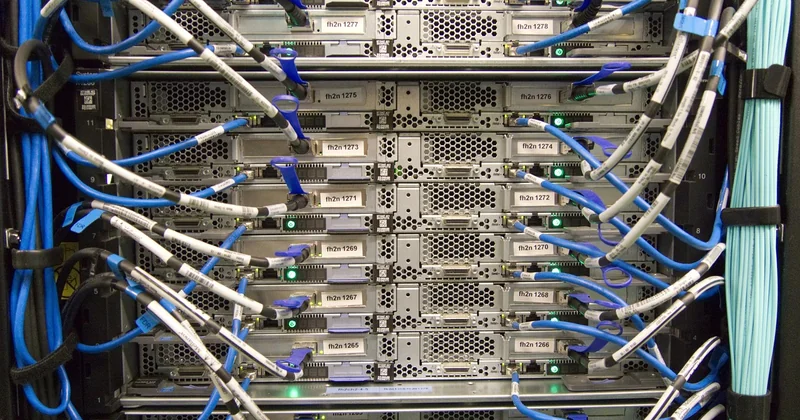
A data center is one hardened thing behind a wall. The edge is hundreds of small computers in warehouses, retail floors, and sometimes a server closet next to a mop sink. Physical access is a real risk. So is the operational reality that these nodes run unattended and, at some sites, poorly powered.
Managing a fleet at scale means treating every node as potentially compromised and potentially offline. That's a mindset shift, and it costs engineering time people consistently underestimate.
Edge vs cloud: an honest comparison
| Factor | Edge | Central cloud |
|---|---|---|
| Latency | Single-digit to low double-digit milliseconds | Tens to hundreds of milliseconds |
| Bandwidth cost | Minimal—only filtered data leaves | Grows with every raw byte |
| Operational complexity | High—many nodes, many failure points | Low—one provider, one API |
| Security surface | Large and physical | Concentrated and controlled |
| Scaling model | Scale out by adding sites | Scale up almost instantly |
| Best fit | Real-time, high-volume, privacy-sensitive | Analytics, storage, batch, model training |
Read that table again and notice it doesn't crown a winner. That's the point. Most mature architectures I've seen run a hybrid: train in the cloud, deploy at the edge, aggregate insights back centrally.
How to decide what goes where
When teams ask me where to draw the line, I give them one filter that cuts through most of the noise.
- Write down your latency budget in milliseconds. If it's under 50, edge is almost certainly required.
- Estimate daily data volume per site. If it's terabytes and only a tiny fraction is meaningful, process locally and transmit the fraction.
- Check your regulatory surface. If the data can't legally leave the premises, the decision is already made for you.
- Ask whether you can realistically operate the nodes. No fleet management capability means no edge deployment, no matter how good the latency story is.
- Start with one site. Learn what breaks. It will not be what you predicted.
That last point deserves emphasis. Every edge rollout I've been near has failed first at something nobody planned for—a flaky power supply, a firewall rule, a firmware mismatch. The technology works. The logistics are where teams bleed.
Why all of this matters beyond the engineering
Step back and the reason edge computing matters isn't technical at all.
It's about where intelligence gets to live. For years, if you wanted to do anything smart with data, you needed to send it somewhere powerful and wait. That shaped what got built. You could have cameras that recorded, or sensors that logged, but true real-time reaction required either enormous local hardware or a network you couldn't fully trust.
The edge dissolves that constraint. It means a small clinic can run diagnostic imaging without a fiber line. It means a farm can act on soil data in the field. It means the intelligence follows the work, instead of the work having to travel to the intelligence.
And that's the part that will matter in the long run—not the milliseconds saved, but the things that become buildable once latency stops being a wall you have to design around. The interesting question isn't whether edge computing wins. It's what people build next, now that they don't have to ask a server on the other side of the country for permission first.